Feed Quality & Safety
MoldBan®
Neutralize the conditions, not just the mold


Weather and storage conditions influence mold growth in grains and feeds, especially in warm and humid regions such as the Middle East and Africa. Molds and fungi are among the most damaging contaminants in grains, causing significant quality deterioration and economic losses. Effective prevention relies on proper storage, aeration, and feed hygiene management to limit mold growth and protect feed safety.


The Challenge
How does UTRIX prevent mold development in feed?

Key Benefits
MoldBan® Impact
Common Questions
Frequently Asked Questions
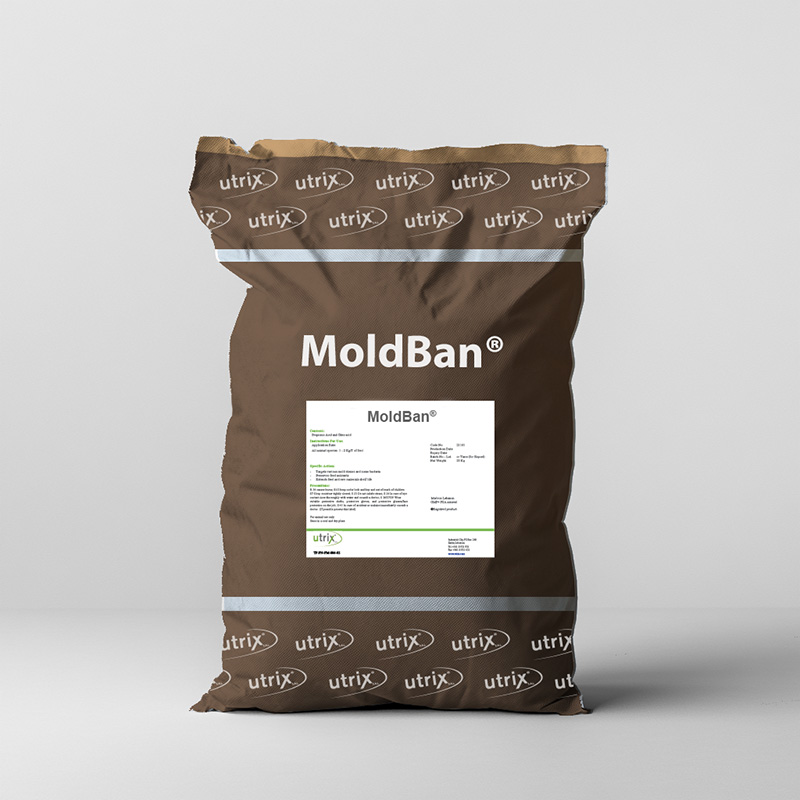
MoldBan® combines propionic and citric acids to inhibit mold and yeast growth. Propionic acid penetrates fungal cells and disrupts internal metabolism, while also exerting osmotic pressure externally, causing dehydration. Citric acid lowers and stabilizes pH, creating unfavorable conditions. Together, they act synergistically to control fungal contamination and extend feed shelf life.
Molds and mycotoxins are closely related but not the same. Molds grow in feed under favorable conditions and can produce mycotoxins as toxic secondary metabolites. While mold contamination increases the risk of mycotoxins, their presence is not always guaranteed. Importantly, mycotoxins are heat- and process-resistant, meaning they can remain even after molds are no longer visible. Controlling molds helps reduce risk, but mycotoxins require separate management strategies.
You might also like